Transforming hazardous aluminum waste into hydrogen and recoverable value
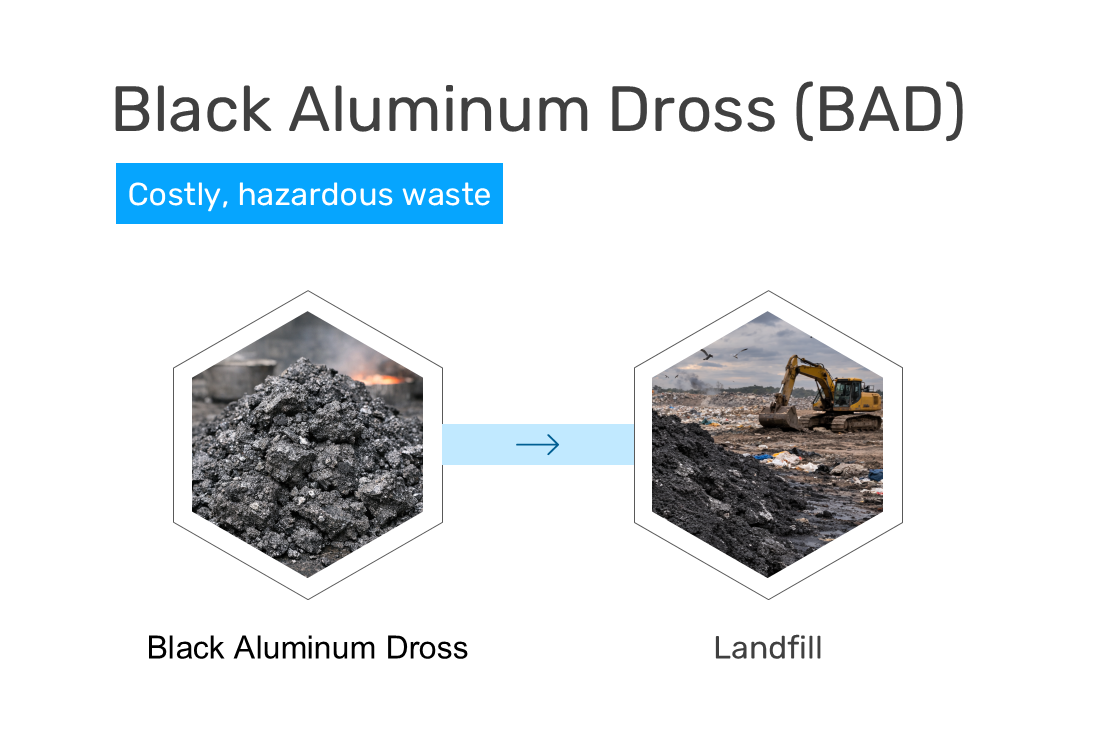
Black aluminum dross (BAD) is a toxic byproduct generated during aluminum recycling.
Up to 95% is landfilled globally due to poor recovery economics, despite containing recoverable aluminum and other valuable materials.
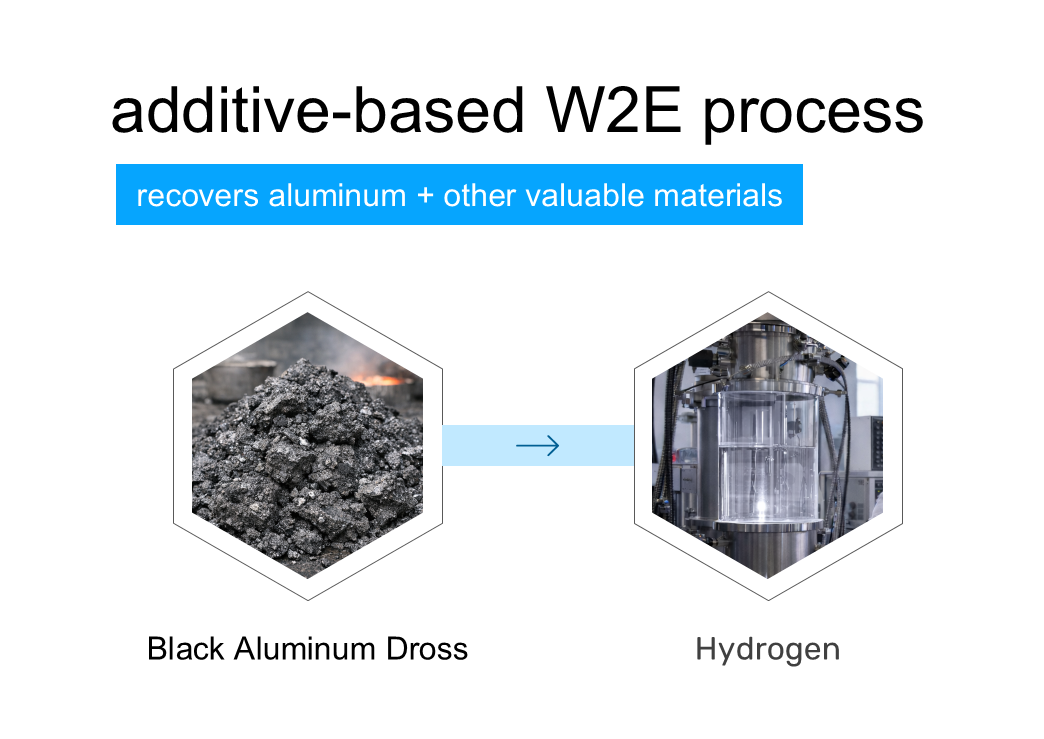
HPQ, through its partnership with Novacium SAS, is advancing an additive-based waste-to-energy (W2E) process designed to convert BAD into hydrogen and reusable industrial byproducts.
The platform addresses both environmental liability and economic inefficiency within secondary aluminum production.
Black aluminum dross currently landfilled
0%
Per-tonne disposal cost in Europe
€0+
INDUSTRIAL WASTE CHALLENGE
Opportunity.
The global secondary aluminum market exceeds $98B and continues to grow.
However, disposal of black aluminum dross remains costly and environmentally problematic.
Recycling pathways are limited due to low economic return and processing complexity.
A system that converts BAD into hydrogen while recovering usable byproducts redefines the economics of aluminum recycling.
AUTONOMOUS & ADDITIVE-BASED SYSTEMS
Solution.
Novacium’s additive-based W2E process enhances hydrogen yield relative to conventional hydrolysis methods.
The system generates green hydrogen and usable heat while producing recoverable solid residues for reintegration into aluminum production.
The process eliminates landfilling requirements and transforms disposal costs into potential revenue streams.
Pilot-scale validation is underway, with commercialization targeted within 12 months.
Hydrogen Generation
Increased hydrogen yield compared to conventional methods.
Waste Elimination
Reduces or eliminates landfill disposal.
Value Recovery
Solid byproducts reintegrated into industrial processes.
Economic Upside
Potential savings estimated between €900–€1,500 per tonne processed.
INDUSTRIAL DEPLOYMENT
Application.
Designed for integration within secondary aluminum recycling operations.
Aluminum Recyclers
Convert disposal liability into hydrogen-based value generation.
Industrial Energy Use
On-site hydrogen and heat production.
Circular Manufacturing
Reintegration of recovered materials into aluminum production cycles.
Frequently Asked Questions (FAQs)
FAQs.
Answers to common questions regarding HPQ’s autonomous hydrogen systems, waste-to-energy technology, and commercialization strategy.
These questions explain the operating principles, scalability, and industrial applications of HPQ’s autonomous hydrogen and waste-to-energy systems. They highlight how the platform addresses hydrogen logistics challenges while transforming industrial waste into energy and recoverable value.
What is black aluminum dross?
A hazardous byproduct generated during aluminum recycling containing recoverable metals and reactive compounds.
How does the W2E process generate hydrogen?
An additive-based reaction enhances hydrolysis efficiency, increasing hydrogen yield from aluminum-containing waste.
Is the technology commercially deployed?
Pilot-scale validation is ongoing with commercialization targeted within 12 months.
What economic benefit does the system provide?
The process reduces disposal costs and creates potential revenue through hydrogen generation and material recovery.
Do you have any specific question not addressed here?
Send your question in an inquiry, and we’ll do our best to respond as soon as possible.