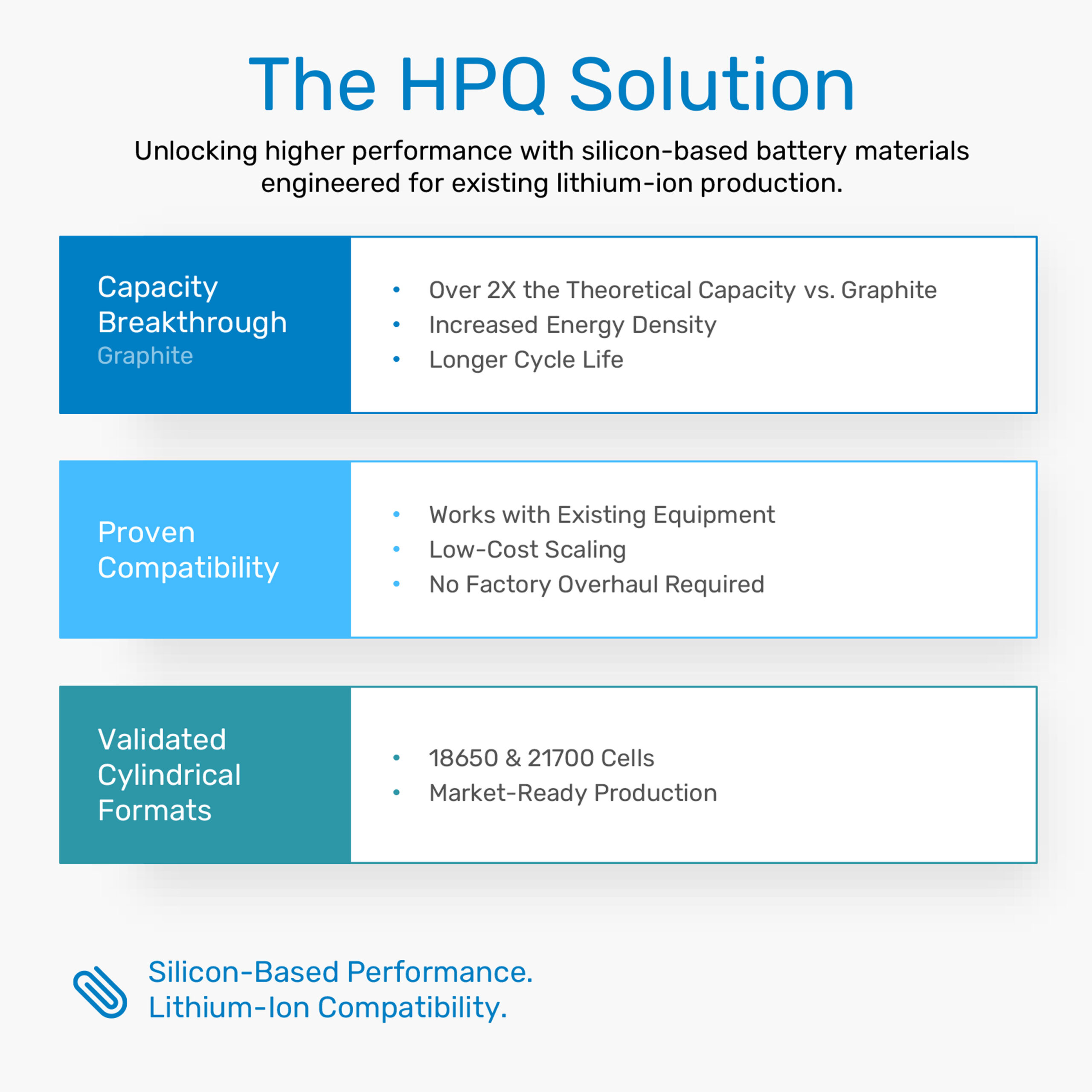
Developed in partnership with Novacium SAS, GEN3 silicon anode materials are engineered for seamless integration into existing lithium-ion production lines.
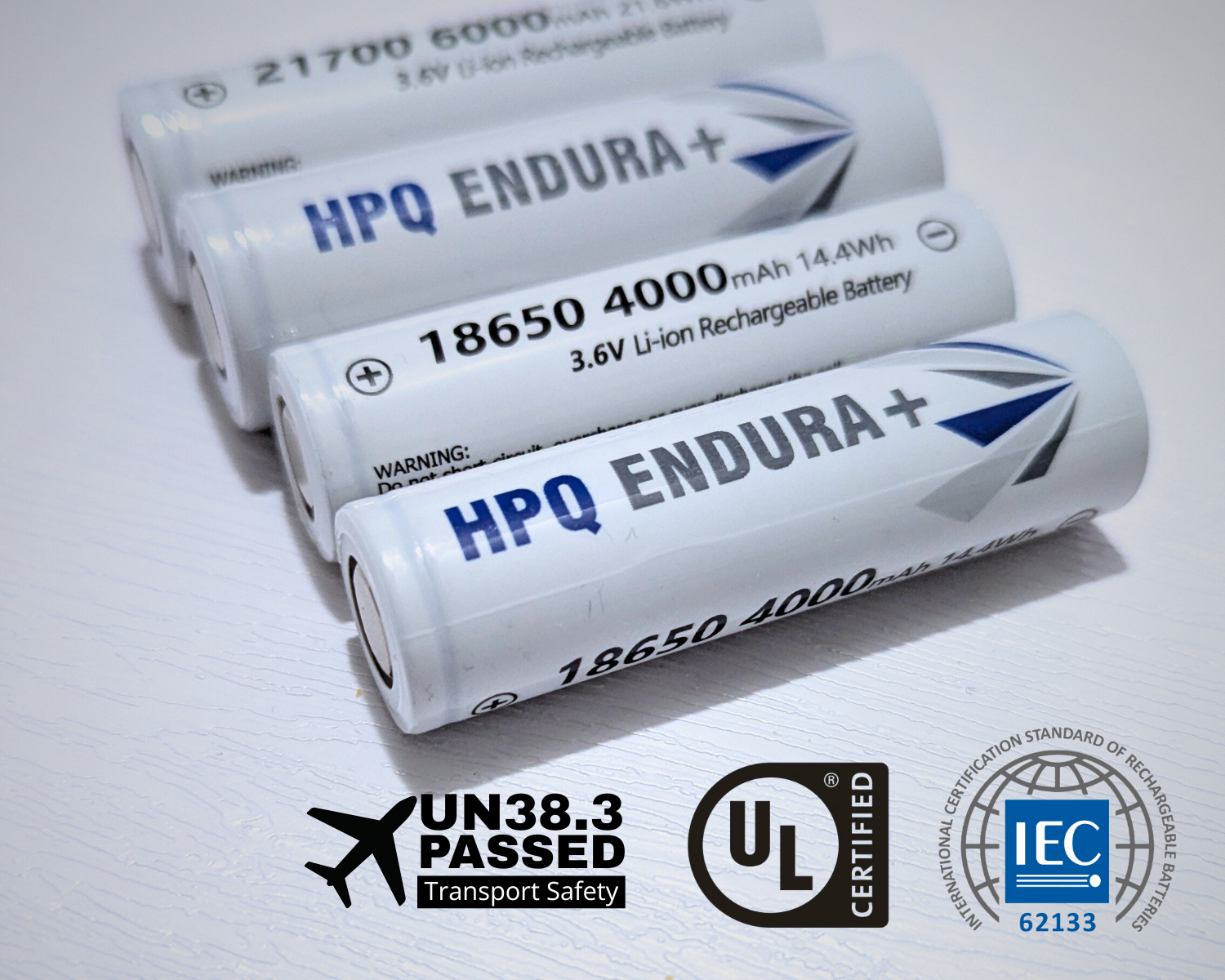
These materials now power HPQ ENDURA+ 18650 and 21700 cells — marking the transition from upstream materials innovation to downstream commercial battery products.
The platform is designed for scalability, manufacturability, and near-term industrial deployment.
18650 ENDURA+ cell capacity achieved
0mAh
Validated charge cycles with sustained performance
0+
ENERGY DENSITY INFLECTION POINT
Opportunity.
Global lithium-ion demand continues to expand across electric mobility, computing, communication devices, and grid storage systems.
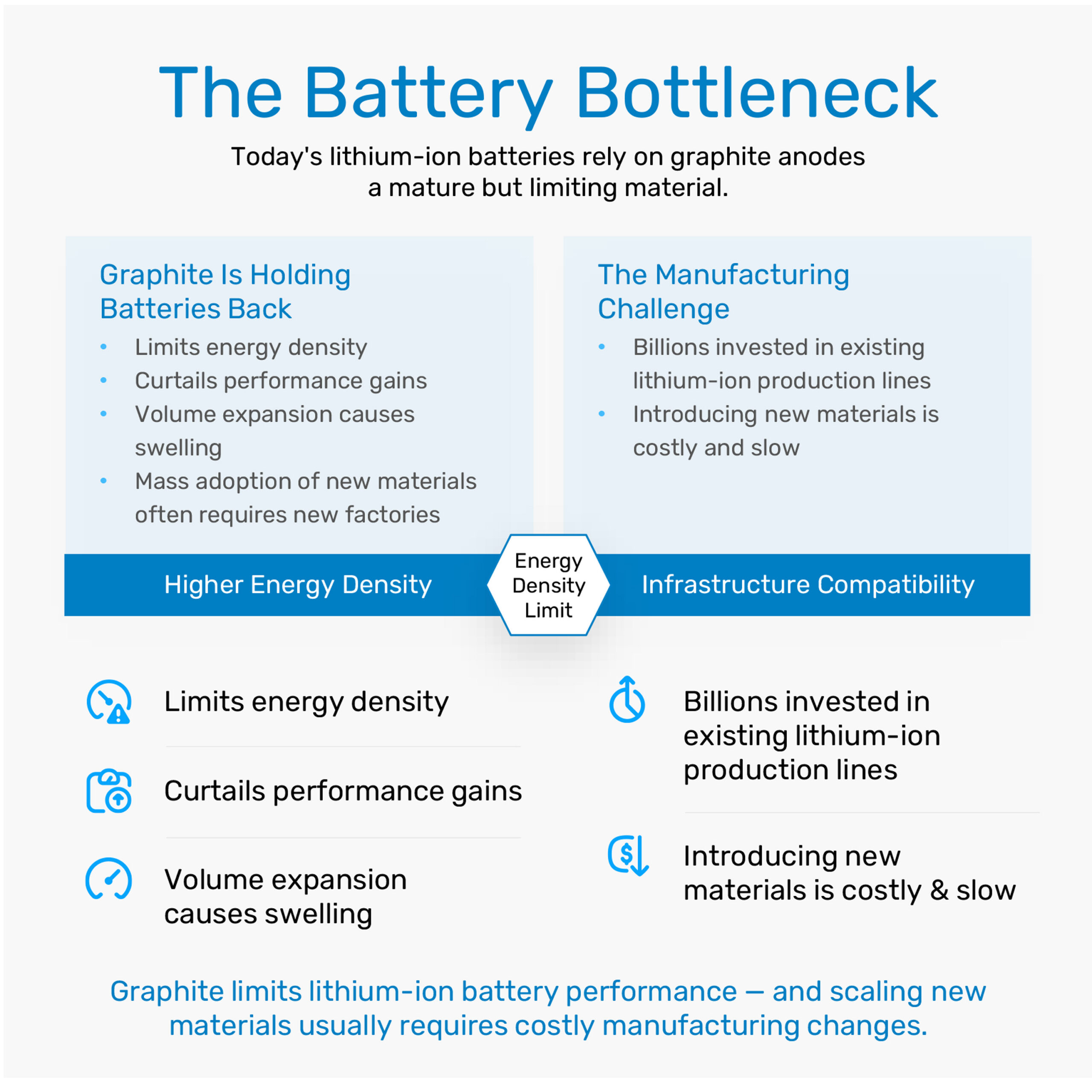
Silicon has long been recognized as a superior anode material due to its significantly higher theoretical capacity than graphite. However, traditional silicon solutions have struggled with swelling, degradation, and manufacturing compatibility.
Battery manufacturers require performance improvements without costly redesign of existing production infrastructure.
A scalable, industrially compatible silicon solution represents a structural opportunity within the battery value chain.
ENGINEERED FOR INDUSTRIAL INTEGRATION
Solution.
HPQ’s proprietary semi-continuous process produces engineered silicon-based anode materials optimized for integration within existing lithium-ion manufacturing lines.
GEN3 materials have demonstrated capacity exceeding graphite benchmarks while maintaining 80% retention beyond 1,000 cycles in commercially sized cells.
HPQ ENDURA+ 18650 (4,000 mAh) and 21700 (6,000 mAh) cells have been produced and certified for commercial distribution.
Non-dilutive government funding of up to $3 million supports development of a 50 TPY continuous production system to scale silicon material output.
Performance
Higher energy density relative to graphite-only cells.
Compatibility
Designed for seamless adoption within established manufacturing systems.
Certification
Commercially validated 18650 and 21700 cylindrical cell formats.
Scale-Up
50 TPY continuous silicon material production system in development.
MARKET DEPLOYMENT
Application.
The combined material-to-cell platform addresses high-growth lithium-ion markets.
Drones
Improved energy density supporting extended range potential.
Consumer Electronics
Higher capacity in compact cylindrical formats.
Industrial & Grid Storage
Reliable cycle performance for distributed energy systems.
Frequently Asked Questions (FAQs)
FAQs.
Answers to common questions regarding HPQ’s silicon-based anode materials, ENDURA+ battery platform, and commercialization pathway.
The following questions outline the performance characteristics, manufacturing compatibility, and commercialization status of HPQ’s silicon-based battery materials and ENDURA+ cells. They clarify how the platform bridges advanced materials innovation with certified commercial battery production.
How does silicon improve battery performance?
Silicon offers significantly higher theoretical capacity than graphite, enabling increased energy density when engineered for stability.
Are ENDURA+ cells commercially qualified?
Yes. 18650 and 21700 formats have completed required certification processes.
Can manufacturers integrate the material easily?
The material is engineered for compatibility with existing lithium-ion production lines.
What is the scale-up plan?
HPQ is targeting 50 tonnes per year of continuous silicon material production.
Do you have any specific question not addressed here?
Send your question in an inquiry, and we’ll do our best to respond as soon as possible.