
Novacium Delivers First Batch of Prototype Batteries to STAT with Twice the Energy Capacity of Batteries Currently in Service
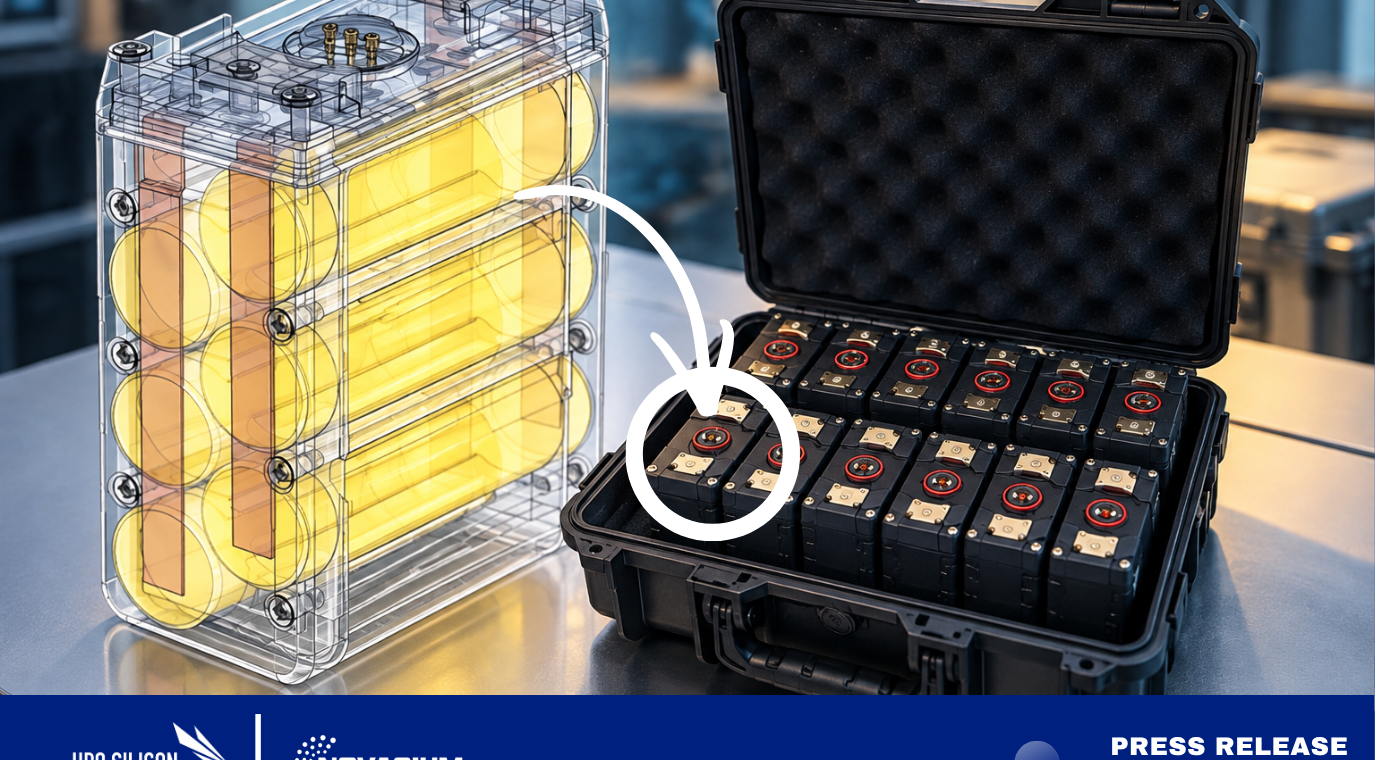
- The first batch, delivered to STAT in the third quarter of 2026, integrates GEN3 21700 cylindrical cells in place of the 18650 cells currently in service
- With this first delivery, Novacium achieved two key project objectives:
– Doubling the energy capacity of the batteries
– Limiting geometric modifications to meet dimensional and connector requirements.
MONTREAL, Canada — HPQ Silicon Inc. (“HPQ” or the “Company”) (TSX-V: HPQ) (OTCQB: HPQFF) (FRA: 8PY1), is pleased to inform its shareholders that its strategic partner, NOVACIUM SAS, a French deep-tech company specializing in green engineering of materials for energy applications, announces that it delivered to the French Army Technical Section (“STAT”), in the third quarter of 2026, a first batch of prototype batteries intended for tactical radio sets. Using its high-capacity cells, Novacium designed batteries offering twice the energy capacity of the batteries currently in service.
This delivery follows the award, at the end of June 2026, of a contract by STAT to develop and supply, in successive batches, these high-capacity prototype batteries.
Transition to 21700 Cells: Double the Capacity While Preserving Compatibility
To achieve this objective, Novacium integrated GEN3 21700 cylindrical cells in place of the previously used 18650 cells. This format offers higher capacity but integrating it required preserving compatibility with existing equipment. Through an optimized cell arrangement and adapted enclosure geometry, Novacium’s teams limited dimensional changes to meet STAT’s dimensional and connector requirements while doubling the battery’s energy capacity. A patent application has been filed for this design.
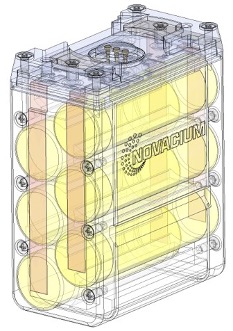
of GEN3 21700 cells and optimized enclosure geometry
Through the integration of these 21700 cells, the new battery pack reaches an onboard energy capacity of 144 Wh, twice the 72 Wh of the reference battery currently in service, and an energy density of 261 Wh/kg, compared with 160 Wh/kg for the existing solution, representing a 63% increase.
An adapted battery management system (BMS), combined with this patent-pending enclosure assembly system, makes the new battery fully compatible with existing connectors, chargers, and interfaces, with only minor changes to its dimensions and mass (42.6 × 98.63 × 74.35 mm; 551 g).
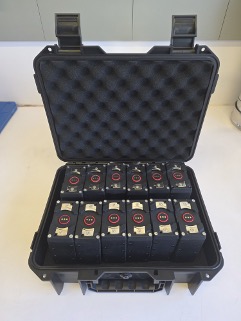
Under a comparable usage profile, this doubled energy capacity is intended to provide up to twice the operating time of the reference battery while retaining existing connectors and chargers. STAT will evaluate the operating time actually achieved under operational conditions.
An Evaluation Campaign and User Feedback Expected in the Coming Weeks
The first batch of prototype batteries delivered in the third quarter of 2026 will undergo an evaluation campaign under operational conditions conducted by STAT. At the end of this phase, detailed feedback (RETEX) will be prepared jointly by STAT and Novacium in the coming weeks.
Lessons learned from this field evaluation will allow Novacium to make the necessary design, ergonomic, and parameter-setting adjustments before producing and delivering a second batch that better reflects a production configuration.
“Doubling the onboard energy of a tactical radio battery while retaining the existing connectors and chargers represented an engineering challenge that our teams successfully addressed. The transition to 21700 cells enabled us to double the battery’s energy capacity, and we worked to limit geometric modifications to preserve compatibility with equipment currently in service. The delivery of this first batch for evaluation under operational conditions is a key milestone: user feedback will guide the adjustments to be made before production of the second batch,” said Dr. Jed Kraiem, Ph.D., Chief Operating Officer of Novacium.
“The delivery of this first batch illustrates Novacium’s ability to transform its anode-material expertise into batteries designed for critical applications,” said Bernard Tourillon, President and CEO of HPQ Silicon Inc., which is itself President of Novacium. “If the evaluation phase confirms the expected performance, this program could provide a technical basis for offering the solution to other allied forces with comparable requirements. For HPQ, this program also illustrates the strategic value of our 36.8% interest in Novacium and of its activities in the defence sector.”
Next Step: A Second Batch Representative of a Production Configuration
Following the evaluation campaign and RETEX, Novacium will begin production of a second batch of batteries incorporating lessons learned in the field and better representing a production configuration. This second batch will integrate Novacium’s new GEN4 cells, with a capacity exceeding 6,500 mAh, with the objective of increasing the battery’s energy capacity at the same mass and therefore its energy density and potential operating time. This stage aims to evaluate the solution’s robustness, ergonomics, and reproducibility for potential larger-scale deployment.
This first delivery forms part of the expansion of Novacium’s activities in the defence and autonomous-systems sectors, notably including the order for battery packs intended for French Army drones, announced on August 19, 2026 through LN’INNOV, and the order for 100 drone battery packs from Alta Ares announced on September 17, 2026.
About Novacium SAS
Novacium is a French deep-tech company based in Solaize, specializing in developing and producing silicon-based anode materials for lithium-ion batteries through a proprietary process. Novacium also designs custom battery cells and packs for demanding applications, particularly in the defence, aerospace and portable-energy sectors.