HPQ Silicon’s Novacium to Present HyDRAS™ Research on Hydrogen Production and Aluminum Waste Valorization at COM 2026
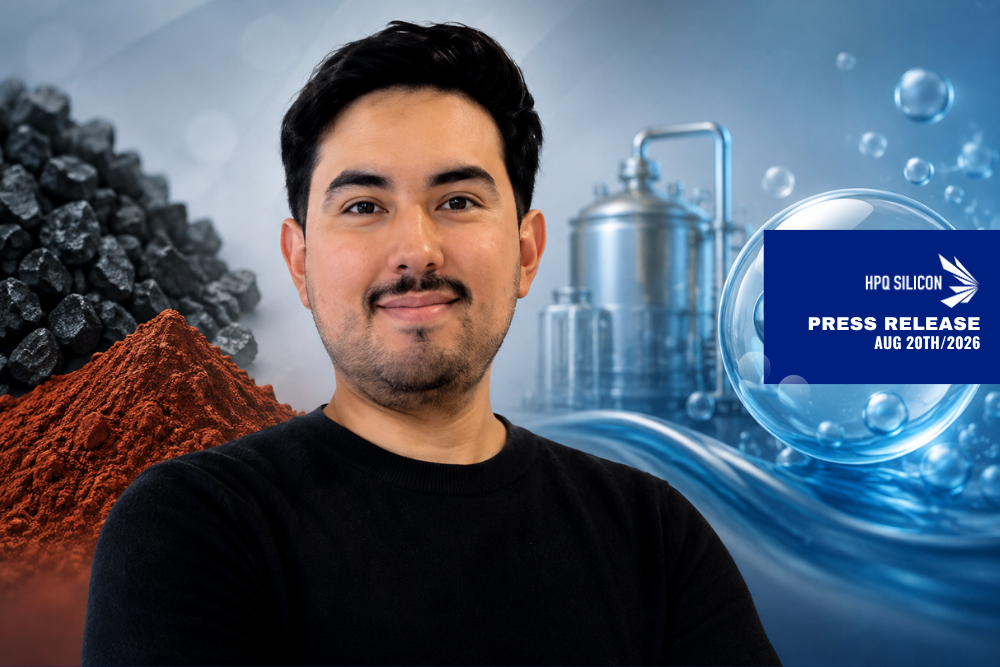
Research to be presented at COM 2026 highlights Novacium’s proprietary HyDRAS™ process, which combines black dross and bauxite residue to produce hydrogen while recovering value from aluminum industry waste.
MONTREAL, Canada — HPQ Silicon Inc. (“HPQ” or the “Company”) (TSX-V: HPQ) (OTCQB: HPQFF) (FRA: 8PY1), a technology company specializing in advanced materials innovation and the development of next-generation processes, is pleased to announce that research conducted by its France-based strategic partner Novacium SAS (“Novacium”) on its proprietary HyDRAS™ (Hydrogen from Dross and Red Mud for Aluminum Sustainability) process has been accepted for presentation at COM 2026.
The 65th Annual Conference of Metallurgists is organized by the Metallurgy and Materials Society (MetSoc) of the Canadian Institute of Mining, Metallurgy and Petroleum (CIM).
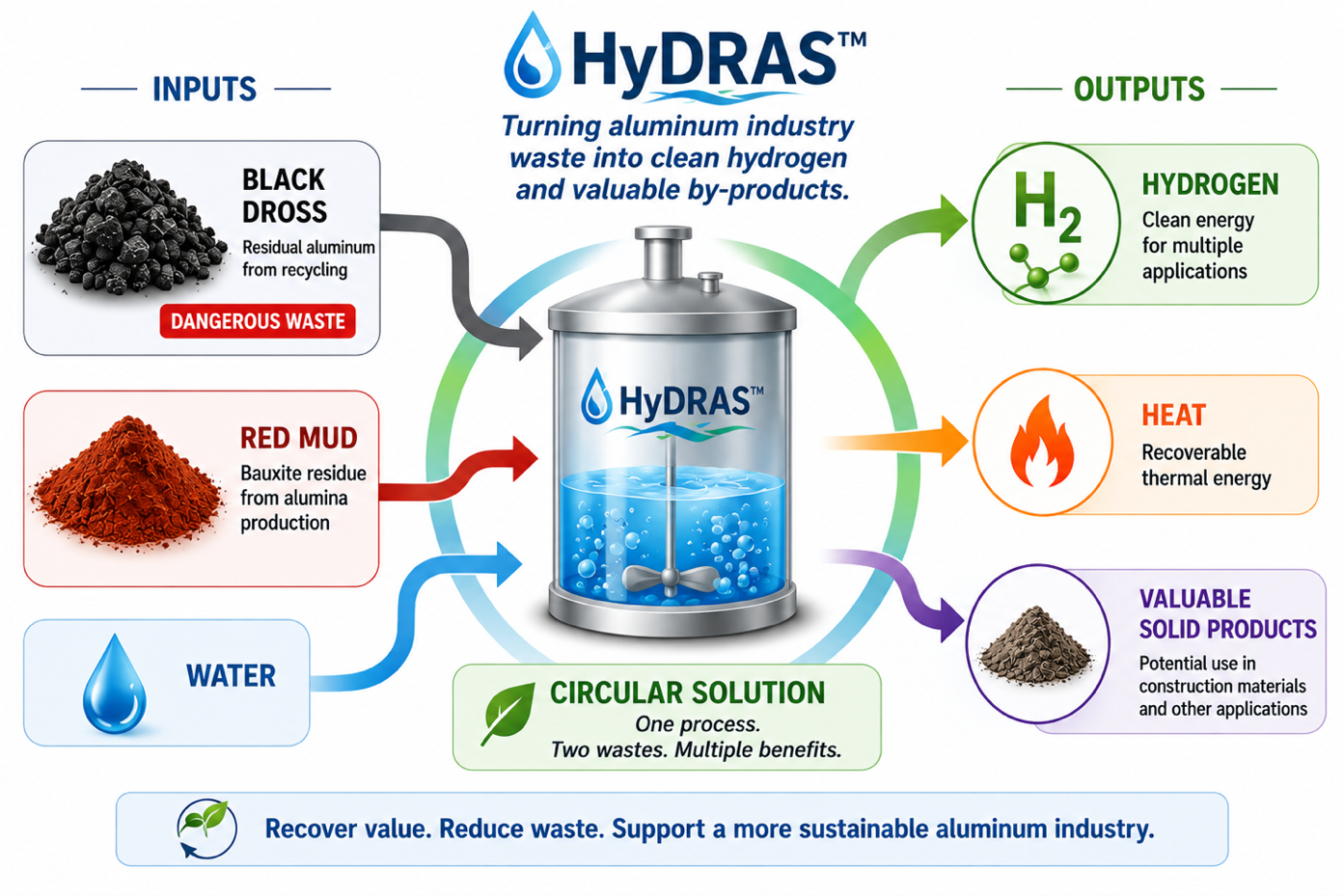
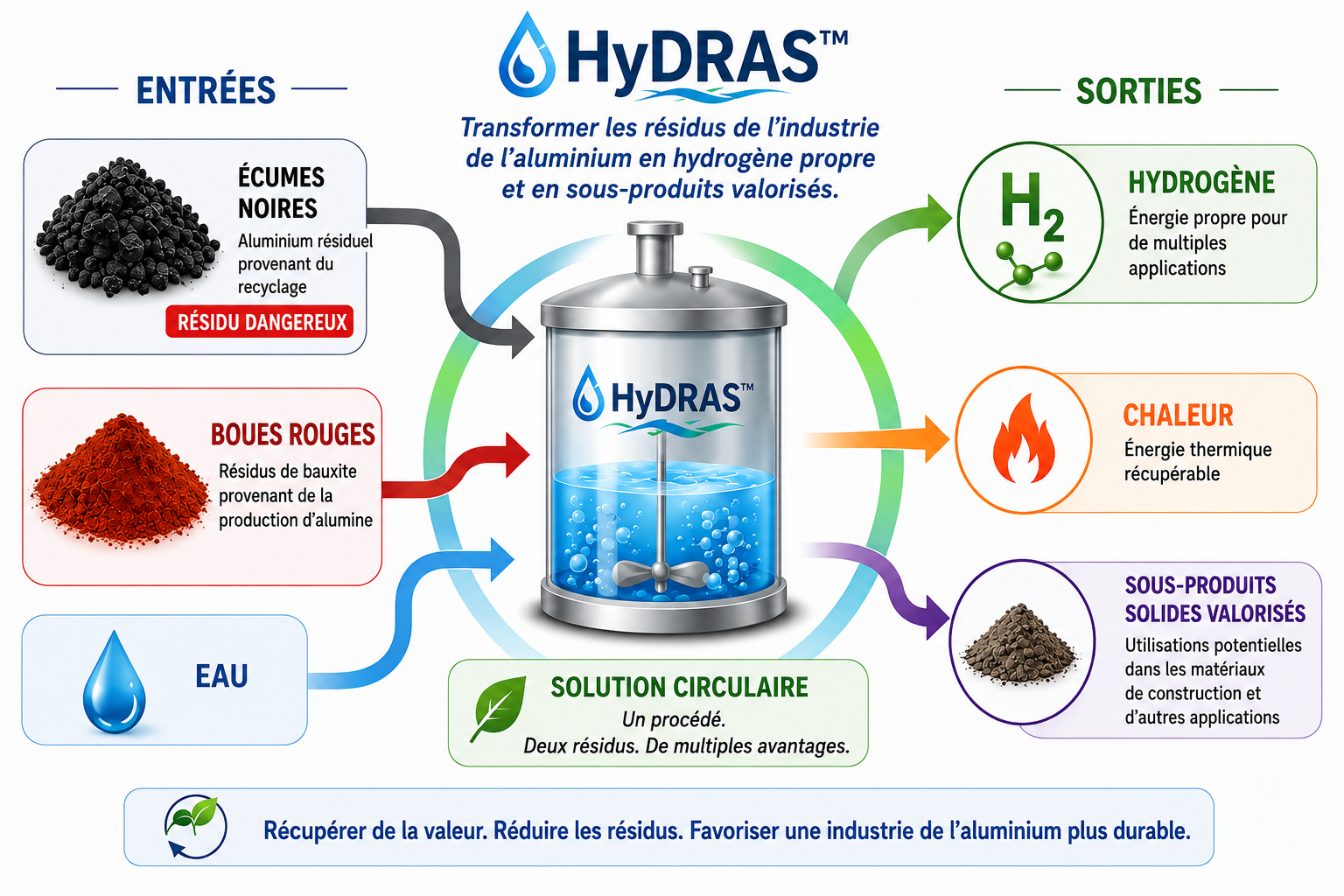
The presentation, to be delivered by Diego Guerrero, MSc., PhD Student at Université Lyon 1 and Novacium, is scheduled for August 20 at 16:00 Calgary time and is entitled, “Aluminum Dross and Bauxite Residue Co-Valorization via Hydrogen Production: A New Perspective on Aluminum Sustainability.” The presentation will highlight research conducted by Novacium in collaboration with Université Claude Bernard Lyon 1 / CNRS / LAGEPP and Casthouse Engineering and Technology AG. The illustration below provides a simplified overview of the HyDRAS™ process.
Turning Aluminum Industry Waste Into a Potential Resource
Black dross and bauxite residue (“red mud”) represent two significant waste-management challenges for the aluminum industry. The HyDRAS™ process combines these two waste streams by using bauxite residue to enhance hydrogen production from the residual aluminum in black dross.
Under the test conditions reported in the COM 2026 paper, using bauxite residue more than doubled hydrogen yield and significantly increased the hydrogen production flowrate, compared with tests conducted without an activation agent. This creates the potential for a circular approach in which one aluminum industry residue helps recover value from another while producing hydrogen and potentially recoverable heat.
The implications for bauxite residue management are particularly noteworthy. Approximately 175 million tonnes of bauxite residue are generated each year globally [1], while large-scale beneficial uses remain limited. In Canada, approximately one million tonnes are generated annually in Québec [2], making the development of new beneficial uses for this material particularly relevant.
“What makes HyDRAS™ particularly interesting is that we are looking at two aluminum industry waste streams not simply as environmental liabilities, but as potential sources of recoverable value,” said Bernard Tourillon, President and CEO of HPQ Silicon. “For Québec, where nearly one million tonnes of bauxite residue are generated every year and the government has already supported initiatives to find beneficial uses for this material, the relevance is clear. Combining bauxite residue valorization with hydrogen production is what makes the HyDRAS™ approach particularly interesting from both an environmental and commercial perspective.”
HyDRAS™ Advancing Toward Industrial Pilot Scale
Building on the results to be presented at COM 2026 and subsequent development work, Novacium believes the HyDRAS™ process is now ready to advance toward industrial pilot-scale demonstration.
The next phase will focus on demonstrating the process under industrially relevant conditions and generating the operating and economic data required to evaluate potential commercial applications.
The results provides the technical foundation for this next stage. The work establishes key process parameters and concludes that the results provide a basis for advancing the technology toward industrial applications.
Strategic Relevance for HPQ
Under its exclusive North American licensing agreement with Novacium, HPQ holds the rights to commercialize Novacium’s hydrogen technologies in Canada, the United States and Mexico.
Successful industrial pilot-scale validation of HyDRAS™ could therefore provide HPQ with a pathway to evaluate commercial deployment opportunities across North America, including within Québec’s established aluminum industry.
Bauxite Residue Valorization — A Recognized Québec Priority
The development of beneficial uses for bauxite residue has already attracted public-sector support in Québec.
In 2020, the Government of Québec announced a $2 million investment in a more than $9 million circular-economy project aimed specifically at demonstrating the treatment and valorization of bauxite residue at the Vaudreuil site. The project included the construction and operation of a semi-commercial demonstration unit [3].
This objective is also consistent with Québec’s broader residual-materials policy, which seeks to maximize the value recovered from residual materials, including their potential use for energy production [4].
Against this backdrop, HyDRAS™ represents a potentially complementary approach, using bauxite residue to help recover value from black aluminum dross while producing hydrogen.
Reference Sources
1. Svobodova-Sedlackova et al. (2024), Mapping the research landscape of bauxite by-products (red mud): An evolutionary perspective from 1995 to 2022, Heliyon, 10(3), e24943.
2. Viana et al. (2026), Evaluation of the potential environmental impacts and benefits of producing alkali-activated concrete from bauxite residue, Journal of Cleaner Production.
3. Gouvernement du Québec (2020), Projet d’économie circulaire au Saguenay–Lac-Saint-Jean – Québec investit 2 M$ pour la valorisation de résidus de bauxite.
4. Gouvernement du Québec / Ministère de l’Environnement, Politique québécoise de gestion des matières résiduelles.